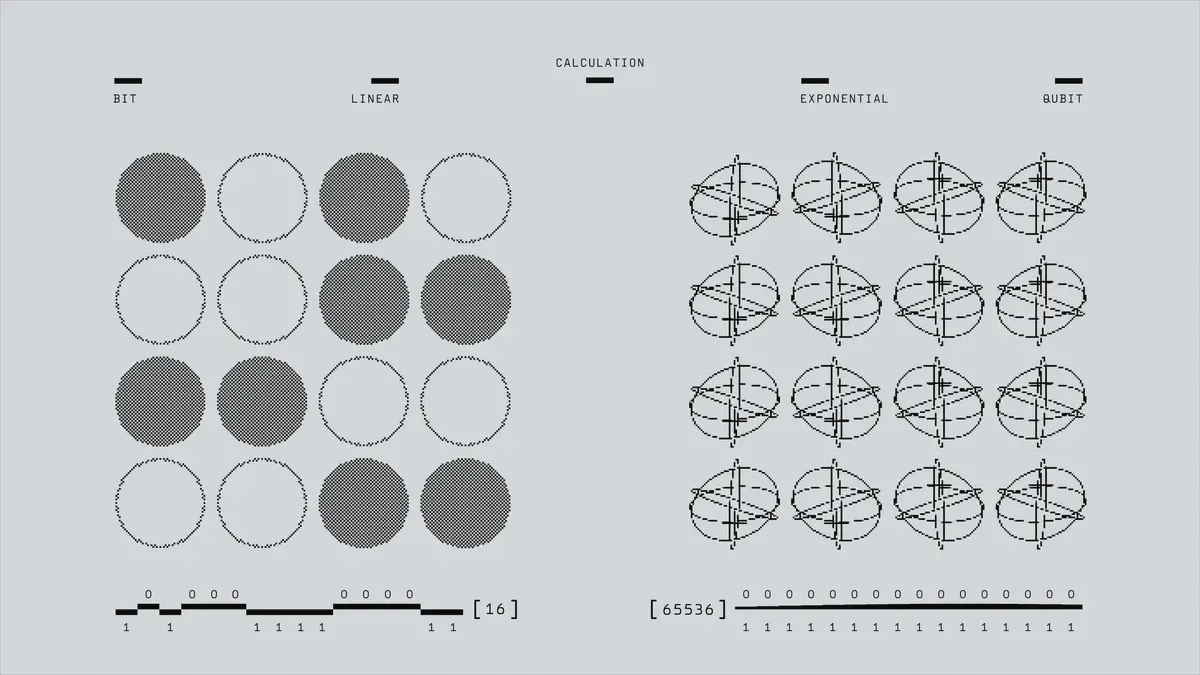
HGE, evaluated on a quantum computer in Osaka.
We evaluated HGE, our evidence engine, on the University of Osaka's OQTOPUS quantum computing system, with 26 experiments in three phases. We delivered the technical evaluation in February 2026.
One method has to work on any instrument.
HGE reads star catalogues and satellite data. The evaluation on OQTOPUS tested whether the engine holds up on a completely different kind of instrument.
What it reads.
- OQTOPUS
- The open quantum computing system of the University of Osaka.
How it works.
- State the hypotheses
- Testable claims about the system were written down before anything ran.
- Run in phases
- 26 autonomous experiments in three phases, each with signed evidence and a replay path.
- Replay
- Deterministic replay was verified for the full set.
- Report
- The depth invariance hypothesis held at 90 percent confidence.
In figures.
- 26
- Autonomous experiments
- 3
- Phases
- 90%
- Confidence for depth invariance
A finished evaluation, not a running service.
We ran HGE on OQTOPUS at the University of Osaka's Center for Quantum Information and Quantum Biology and delivered the technical evaluation in February 2026, with its Ed25519 signed evidence bundles. The report went to the university and is not public.
Papers, code and data.
Who it serves.
- Quantum computing research groups evaluating their systems.
- Laboratories that need experiments run and documented the same way every time.